
Reading & Writing
In chapter 9 of “Animated Storytelling,” Liz Blazer talks all about the different techniques used in animation. She says finding the right technique is the key to expressing the big idea of an animation and can impact the way the story is told. To find the best technique, she says to consider the format, or where the animation will get the most views. That can be on a phone, TV, computer, etc. In addition, the technique picked must stay true to the message and tone of the story.
The hand drawn technique can be created using pencils, paint, or other drawing objects. It can be the most expressive and emotional technique because it is personal. Stop motion animations are frame-by-frame pictures strung together. They can be made in 2D on a flat surface or in 3D on a set. Another common technique is 2D CGI. This includes any animation created in a 2D editing software. These animations are easy to read and are used in many broadcast graphics. 3D CGI is very popular with big animators like Disney and Pixar. The elements are created in a 3D software environment with no limitations at all. The scenes and characters can look just like real life or a new world can be easily created.
Research to Inform
Based on what I learned from readings this week, I found five examples of animations using the 12 basic principles of animation.
Create: Logo Stinger
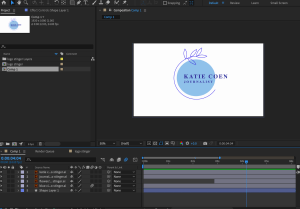
To show what I’ve learned about the principles of animation, I created an animated logo. I first found a logo on Freepik that I edited to make my own. I changed the font, colors, and shape in Adobe Illustrator. Then I imported the logo to Adobe After Effects, where I used keyframes to animate each layer. I also added sound effects from freesound.org to bring the logo to life.
Before this project, I had used Illustrator a few times, but I was not super experienced. It was easy for me to remember how to use the software. The animating portion of the project was a fun way to expand my horizons in After Effects.
 Katie Coen
Leave a comment