

Visuals have taken over the world. Everywhere you turn you will see a picture, video, or graphic. Whether you look down at your phone or look up in a big city, visuals surround you. They can give you information, like a graph about a scientific issue, or entertain you with a TikTok video. Journalists use these visuals to inform their communities and tell stories in a more interesting way, but it wasn’t always like this.
Journalism started as a purely written form of communication. Now, it has evolved through technology and media. They have changed how often we see visuals and the way we share them, which has shifted the way news outlets display information (Losowsky). There is more visual storytelling than ever, in part because of social media and the obsession with television and movies. It’s also because journalists have used the science behind the rise of visual storytelling to their advantage by including a wide range of visuals in their work. The transition to visuals changed the industry and shifted its focus, making media more accessible and memorable for everyone.
The Rise of Visual Storytelling
Over a significant amount of time, the world moved from a written focus to a visual focus. As technology evolved and more people got to experience visual arts, they became more drawn to the act of looking rather than reading. That’s because words and numbers are less likely to convey memorable or easy to understand information. More of our brains are used for visual processing, making images or videos earlier for us to understand (Losowsky). We can process visuals 60,000 times faster than words. Since the average attention span is only eight seconds, the quicker someone can understand something, the more likely they are to remember it and engage with it. When you see a traffic sign, you may notice they are mostly drawings.
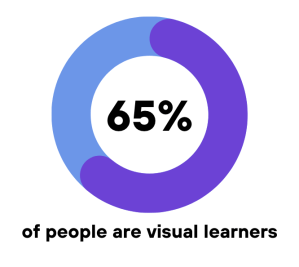
That’s because a visual is much easier and faster for our brains to process. The switch to visuals may also be a result of visual learning. It is estimated that 65 percent of people are visual learners that would rather look than read (Marx).
It’s not only our brains that brought on the rise of visual storytelling. Social media has hugely impacted the way people interact with content. Platforms like Instagram, X (Twitter), Facebook, and Tiktok have made it normal for people to see hundreds of posts every minute. They encourage people to make short content that is easily digestible. The idea of these short videos and brief captions on photos have limited attention spans because we know we can get the same satisfaction on a short post with minimal effort and a long post. Now, social media users crave instant gratification. Many studies have found excessive social media use has negatively affected cognitive function, memory, and the ability to focus (Sharma). We became so used to the quick delivery of content that we became lazy. People don’t want to read anymore, they want to see the world through visuals that they can easily process.
The Evolution of Journalism
Before scientists were aware of the simplicity of visual processing and the introduction of social media, journalism was strictly written content. Many historians believe journalism started with written publications in ancient Rome. The “Acta Diurna” was a sheet of paper that reported on daily events and shared public speeches (Britannica). It was created to fill people in on what they were missing. The spread of publications like this was ignited by the printing press. A person could spell out information with stamps that were then transferred to paper with ink. It was created in China and mostly used for religious texts at first (The History of Visual Communication). Then it became the main method for printing newspapers.
The first real newspaper was established in Germany in 1609, but gained popularity in England. The papers served as a way for people to learn about the government and what was happening in their communities. They started to gain traction during the rise of literacy, meaning more people could read them (Britannica). Eventually, magazines with printed images started to circulate, marking the first time visuals were used in journalism.
As technology evolved again, radio and television news became the prime focus. The industry saw a switch from consumers reading to listening and watching. The first radio newscast was in Pittsburg, Pennsylvania in 1920 (Paine). People soon realized listening to someone talk was easier than reading. It also allowed more listeners to connect emotionally to news, as they heard more details about what was going on. This could be attributed to journalists having more creative freedom and an informal style. Instead of writing professionally, they could talk in a conversational manner that was more intriguing to listeners.
Television news broke barriers for journalism. News broadcasts reached more people than ever before (Paine). The idea of “live news” gave people the feeling of urgency, like they were being informed in real time. This is because it took less time for news organizations to get information out there. They didn’t have to wait to print a newspaper. Instead, they delivered the news verbally. Television is heavily focused on visuals. People were drawn to the idea of seeing what was happening in the world around them. Video allowed them to experience an event in a way they never had before.
Television news continued its reign for decades. Written newspapers continued to succeed, as they still do today, but both styles of journalism were rocked when social media was established. Similar to the origins of journalism, social media started with a focus on writing. Blogs and online forums allowed people to communicate through the internet before Facebook and X (Twitter) created a push for brief posts. Then came the switch to visual social media. Platforms realized people wanted to see rather than read and introduced methods of posting photos. Image based networks like Instagram grew exponentially as technology giants released more phones and devices with quality cameras (Moritz). Then video platforms, like Vine and eventually TikTok, gave social media users the ability to show in a whole different way. The movements and gestures in videos could convince a viewer better than reading or looking at a static image (Pires). News organizations and content creators across the world still use this logic today to increase their views and engagement.
In retrospect, the rise of social media took a similar path to journalism. It started with an emphasis on text, then moved to feature more visuals. That is because corporations realized people were drawn to something they could see and easily comprehend.
Journalism Today
The switch to visual storytelling and social media has hugely impacted the way journalists share news now. They get more engagement using visuals, especially online and on social media. That led news organizations to focus heavily on the web and shareable content (Paine). Although this was a difficult transition, many news stations have a whole department dedicated to posting online and writing for the web. They have other teams who strictly post on social media accounts. They have learned these digital articles or posts are more shareable and easily accessible to people across the globe, which improves the news organizations reputation and standing among competition.
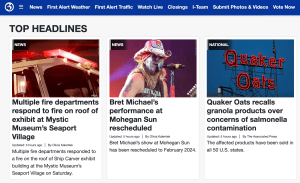
Social media has also brought on more competition for news outlets. “Citizens journalism” has skyrocketed. Citizen journalists are people and accounts online and on social media that post news independently. They run accounts on a niche topic and post about it regularly. They are able to gain credibility and a following, just like news organizations can. These people not only post their own news content, but they can call out journalists and fact check their reporting. Since social media is a “free for all” environment that does not censor much material, they have the ability to post whatever they want, even if it is not true (Barnes). Citizen journalists still have legal liability just as news organizations have, as they can get sued for slander, but their careers do not bank on accuracy. While news organizations use primary sources and confirmation, rumors spread quickly through social networking. This has led to a variety of trust issues and “fake news” controversy, but has also pushed news organizations to be better. People sharing their own content about breaking news has forced professional outlets to be on top of stories at all times (Norman).
Under the Desk News is a popular TikTok account. The host, V Spehar, worked a cooperate job before posting short videos explaining top political news stories. Although she is not a professional journalist, Spehar has grown a massive following based on her ability to break down facts.

Although there have been downsides to citizen journalism, it has also helped news organizations. Everyday people become eyewitnesses to crime and events, giving them the credibility to talk to news outlets and share their content. Many news stations and online newspapers have submission links where anyone can send in photos of crime, weather, or other content. This user generated content can regularly be seen on television and on the front pages of newspapers (Newman).

Eyewitnesses have become a huge contributor to breaking news because they share their pictures or videos before a news station can get somewhere to cover what is happening (Newman). Eyewitnesses also post their content on social media, alerting outlets to things that are happening. Then the reporters can confirm information and blast it to a community.
In addition to citizen journalism, professional journalists use social media to promote their content. Reporters and anchors post their stories and become a liaison between a news organization and their communities. They gain a following and get more people to watch and engage with their content. Many reporters post short videos from breaking news scenes, while others share their longer investigative work.
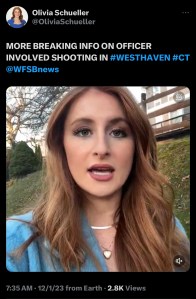
A reporter sharing an update on breaking news coverage on X (Twitter).
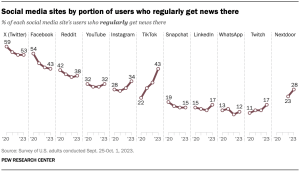
Social media has allowed for news to spread extremely fast. Instead of waiting for a newspaper to print or waiting for a news broadcast, news can be shared instantly. A post can be created in minutes and can reach more people than any other form of news can. Three in ten U.S. adults say they regularly get their news on Facebook, while the number of people getting information from TikTok has dramatically increased since 2020. 43 percent of TikTok users say they get news from the platform, compared to 22 percent in 2020 (Pew Research Center). Once something is posted on these popular social platforms, it spreads to millions of people. These posts have a much further reach than any singular TV news broadcast, especially because posted content lives forever.
If a news organization were to have a story go viral, it improves their image and standing in the industry. The attention can create an instant cash flow and boost their ratings, which are heavily focused on in the industry. Each station wants to be better than their competition, and they have realized social media can help them achieve that goal.
Types of Visuals Used
Outside of social media, traditional methods of journalism have embraced visual storytelling as well. All news outlets, whether they focus on print or broadcast, use photos, videos, and graphics to spread information.
Photojournalism has become a distinct form of art used by people across the world. It can communicate a story through visuals and give a deeper understanding of a person, place, or event (Shurbaji). This is because photos have the potential to show exactly what is happening in a moment. The powerful imagery is often used to show people struggling or present a social issue.

For example, photojournalists have captured moments from Black Lives Matter protests across the U.S. They show so much more emotion than can be put into words. The photo above, published by ABC news in 2020, makes a viewer feel much more than if it were summarized in text. Seeing the emotions this woman has is far more impactful.
Characters are often highlighted in photojournalism because it gives the audience a chance to learn about a person firsthand. They can make their own judgements about any person, place, or event and can interpret images in many ways.
Video can similarly be up for interpretation, while graphics, like charts, graphs, and maps make digesting information much easier for viewers.
Importance of Visuals
Visuals enhance the communication of news. They help people understand facts better and present information in a relevant and impactful way. Because of this, visuals must be considered from the start of the reporting process. That way the visuals work cohesively with the idea of the story (Dahmen). However they are incorporated into reporting, they are extremely important for many reasons.
First, visuals help with engagement. This was disgusted earlier with the topic of social media. Visuals capture an audience’s attention more than words and encourage them to keep reading or watching a newscast. Engagement means everything to news organizations fighting for the most views, clicks, or shares.
Aside from engagement, visuals help bring clarity to complicated news stories. They give context and highlight the important details viewers should pay attention to (Delbert). Visual graphics can help simplify complex information. Photos and videos can help someone see an event first hand. Charts, graphs, and maps also help to break down facts.
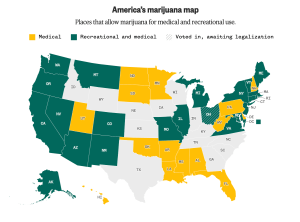
This map, made by NBC News, shows the states the standing of legal marijuana across the U.S. Instead of listing the states, the visual helps people understand in a shorter time frame. Plus, it saves them the hassle of reading and looking for information on their state.
These visuals help make journalism more accessible to all. Visuals can help a diverse audience understand a topic, including people with different learning styles, language barriers, and disabilities. A picture is worth a thousand words because most anyone, despite their language or ability, can see it through their own eyes.
During the COVID-19 pandemic when people were stuck in their homes, journalism made education and learning what was going on accessible in a different way. They turned to the news and social media to find out how many people were sick and what lawmakers were saying. Without this accessible information, people would have been confused and uneducated about the deadly situation.
Using a mixture of graphics, images, and video give a new organization a diverse range of content. Visuals in collaboration with text can make any story better. The elements work together to tell a broader, better story that is more likely to intrigue a wider audience. The combination also makes content more memorable. If someone sees a story with graphs and pictures, they will be more likely to remember the facts. This is why many journalists use the WED strategy. It means using writing, editing, and design to produce a journalistic project that is more powerful than any individual element alone (Reason). The broad range of text and designed visuals is more likely to resonate with the audience.
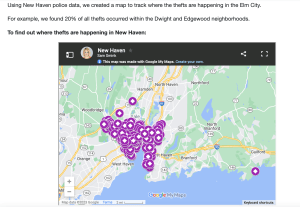
This is an example of news coverage using multiple elements. WFSB Investigative Reporter Sam Smink found where car thefts were happening across Connecticut. Along with her visual news package, she wrote an article and created interactive maps to show viewers where cars were being stolen.
This content stays with someone because of the emotional impact. Visuals can evoke emotions to make an audience connect with a story on a deeper level. If they see the way a family feels after losing their loved one, they are more likely to feel for them. Or if they see a crime scene, they will feel invested in what is being investigated. This is one of the reasons why broadcast news has become so powerful. The audience is given a chance to see video of what is happening in their community. That can make them feel disdain, empathy, relief, happiness, or any emotion. The imagery broadcast news uses is more likely to make someone feel an instant reaction while grabbing their attention that leaves a long lasting impression (Dahmen).
Overview
The world has drastically shifted since journalism began, and when visuals came into the equation, the world changed again. The relatively quick change in perspective from a focus on words to visual content came as research brought forth the importance of seeing. This concept has allowed people across the world to visualize from a distance and make their own opinions about people, places, and things. When social media gained popularity, the push for visuals became even greater. Now, visualization is a prominent subject in the reporting industry.
The use of photos, videos, and graphics continues to evolve and fit people’s needs. As the COVID-19 pandemic ended and people were able to see their communities again from outside their homes, they still turned to journalists to learn about what was happening worldwide. This is why the journalism industry is so important, and visuals will continue to be used to support the reporting process.
Resources
Barnes, C. (2012). Citizen Journalism vs. Traditional Journalism: A Case for Collaboration. Caribbean Quarterly, 58(2/3), 16–27. http://www.jstor.org/stable/41708775
Dahmen, N. (2017, December 2). How to do Better Visual journalism for solutions stories. MediaShift. https://mediashift.org/2017/11/visually-reporting-solutions-stories-newsrooms-classrooms/ (Module 4)
Delbert. (2023, January 2). How can broadcast journalists use visual elements, such as graphics and footage, to enhance a news segment?. CPI Journalism – All About Journalism. https://cpijournalism.org/visual-elements-to-enhance/
Encyclopædia Britannica, inc. (2023, December 8). Journalism. Encyclopædia Britannica. https://www.britannica.com/topic/journalism
Klanten, R., Ehmann, S., Losowsky, A., & Schulze, F. (2012). Introduction. In Visual Storytelling: Inspiring a New Visual Language. essay, Gestalten. (Module 1)
Moritz, D. (2017, November 28). The shift to visual social media – 6 tips for business [infographic]. Socially Sorted. https://www.sociallysorted.com.au/shift-to-visual-social-media-6-tips-for-business-infographic/ (Module 5)
Newman, N. (2009). The rise of social media and its impact on mainstream journalism (Publisher’s version, Reuters Institute for the Study of Journalism: Working Papers).
Reason, R. (2002, August 20). Wed: The integration of writing/editing/design. Poynter. https://www.poynter.org/archive/2002/wed-the-integration-of-writingeditingdesign/ (Module 4)
Reuters Institute for the Study of Journalism, Department of Politics and International Relations, University of Oxford.
Paine, E. (2015, May). (thesis). The Next Step: Social Media and the Evolution of Journalism. Retrieved from https://digitalrepository.salemstate.edu/handle/20.500.13013/851.
Pew Research Center. (2023, November 15). Social Media and News Fact sheet. Pew Research Center’s Journalism Project. https://www.pewresearch.org/journalism/fact-sheet/social-media-and-news-fact-sheet/#:~:text=News%20consumption%20on%20social%20media&text=Slightly%20fewer%20(26%25)%20regularly,%25
Pires, C. (2022, November 30). 10 types of visual content you need for social media in 2020. Visualmodo. https://visualmodo.com/10-types-of-visual-content-you-need-for-social-media-in-2020/ (Module 5)
The Printing Press. viscomhistory. (n.d.). https://www.historyofvisualcommunication.com/05-the-printing-press (Module 1)
Sharma, P. (2023, May 31). The attention span conundrum: How social media has transformed and challenged our focus. LinkedIn. https://www.linkedin.com/pulse/attention-span-conundrum-how-social-media-has-our-focus-palak-sharma#:~:text=Numerous%20studies%20suggest%20that%20excessive,for%20deep%2C%20concentrated%20thought%20diminishes.
Shurbaji, E. (2014, December 17). Photo narratives. Medium. https://medium.com/learning-journalism-tech/photo-narratives-d77b812f99dd (Module 4)
Twitter. (n.d.). Public relations trends: PR with visuals. Twitter. https://business.twitter.com/en/blog/public-relations-trends-pr-visuals.html
 Katie Coen
Leave a comment