
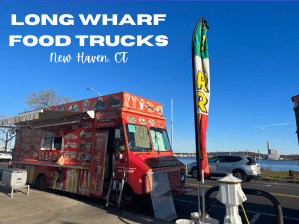
This week, I brought my vision for my montage to life. I researched, then filmed and edited my montage of the Long Wharf food truck park in New Haven.
Reading & Writing
Chapter 10 of “The Bare Bones Camera Course for Film and Video” explores the editing process. Tom Schroeppel explains that editing is a way to control what a viewer sees and hears, and it can be a difficult task. They must establish the reality of the project and convey it to the viewer without confusion.
The first step in the process is logging the material and marking up the script. This allows the editor to get familiar with the material and decide what works well. Then they can establish what shots to use. Basic sequencing of a wide shot, medium shot, closeup, and cutaway are used while making sure each shot is different. This allows the viewer to follow the story and stay interested. The editor establishes the pacing, or the rate at which the shots and sound change. They must give the viewer enough time to absorb what is being shown to them. This means new information should be shown for a longer period of time. Schroeppel says to only change the shot when it helps communicate the message or keep viewers intrigued. Plus, the editing style used should match the tone of the project.
Editing the sound is a key part of the process. Background music is most effective when the viewer doesn’t even notice it. It should fit with the mood of the scene and be consistent. There are many ways to transition between two types of music depending on the project. Mixing the sound improves the quality and effectiveness while putting all the sound used together. This can include voices, music, and sound effects.
Research to Inform
To learn more about editing styles, I found three videos that all use different techniques.
Paris Travel Video
This video about a trip to Paris uses a very fast paced style. Most shots are shown for about five seconds, but they do vary. The shots tend to flow with the music, making some longer than others. For example, at 58 seconds, the shots flash for only one second to match the beat of the song. A few different types of transitions are used throughout. Some have movement and are sped up, almost like the viewer is being pushed into the next shot. One really cool transition is at 1:22 where a painting of the Eiffel Tower becomes the real thing. I think the editor chose to create the montage in this style to get an emotional reaction. The slow song sets the tone immediately, making the viewer feel and connect with the beautiful landmarks of Paris.
Inspirational Video
This video is an emotional and inspirational message about life. The editor wanted to leave the viewer with a strong message and feeling, so they used very slow transitions and shots. The transitions were almost all fades. They faded to black then back up into another shot. It seems the editor believed this would bring the scenes together and make the shots resonate with the viewer. Each shot is up for about five seconds, similar to the last video. It also has somber music, which further pushes the message of the importance of making an impact onto the viewer.
Summer Adventure Video
This video is very different from the last two because of the tone. It is an uplifting, happy montage showing off a summer experience. The video starts with short clips lasting one to two seconds then continues with longer shots. The length tends to match the beat of the music. There are no transitions used besides one fade to black at 42 seconds. Instead, the clips are just strung together. To make this montage more professional and highly edited, transitions could be added. The editing techniques the creator used highlight the amount of the videos they took over a period of time. They clearly wanted to show off what they did and leave the viewer inspired to have a fun time with their friends as well.
My Video Montage
Based on the storyboard and script I previously created, I created my montage of Long Wharf.
The montage features a variety of camera shots that use the visual composition guidelines. For example, leading lines is used at 38 seconds and shallow depth of field is used at 16 seconds. There is also music and sound effects from Free Sound and Free Music Archive that accompany the voice over.
Making this montage was a fun process for me. I love filming and editing videos that turn into a creative way of telling a story. Long Wharf is an exciting and engaging place to visit, so I kept that in mind when producing this montage.
 Katie Coen
Leave a comment