
This week, I started working on a podcast all about the importance of journalism and why it’s so necessary for people to know what is going on in the world. But first, I had some research to do.
Reading & Writing
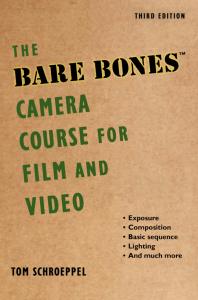
Chapter 8 of “The Bare Bones Camera Course for Film and Video” by Tom Schroeppel focuses on sound. Sound is everywhere and surrounds us everyday, but Schroeppel explains how we hear things. All sounds are caused by vibrations. When they hit our eardrums, they vibrate too, then convert that to nerve impulses and get sent to the brain.
When it comes to recording audio, microphones come in handy. They vibrate when they are hit by sound waves and pick up the vibrations of our voices and the world around us. There are many different types of microphones that all have their own purposes, including lavaliers, which are good for hiding background noise during one-on-one interviews, handheld mics, and shotguns that are useful when shooting a scene. Everyone now has a microphone in their pockets. Mobile phones are a very easy way to record audio. Schroeppel says it’s important to record clean sound no matter what the purpose is, and sometimes the audio should be recorded separately from the visuals. When recording is complete, sound effects can be added in post-production to take the project to a new level. He calls these wild effects.

The Podcast Host has a variety of articles and content that help someone kick start their own show. In the article “The Art of Creating an Invisible Podcast Episode Script,” Kevin Anderson breaks down what a podcast should sound like to the audience. It should be an “invisible script” that flows so well the listener thinks it was ad libbed. It involves writing to be heard rather than writing to read, which should be kept in mind when scripting. Anderson explains it’s important to use a narrative flow with an introduction, body, and ending to hook the listener then explaining the full story. This should all be done in a conversation tone with short sentences.
In a different article, “Podcast Scripting: How Do I Write a Podcast Script?,” by Colin Gray, the types of scripting for a podcast are outlined. Some podcasters live by their scripts and others wing it on the spot. One type of a script is a word-for-word written transcription of what the host says. It makes sure you cover everything, but can sound monotone if you forget to add your personality. A detailed plan includes a list of topics you’ll cover and the information you’ll need without writing a full script. Finally, Gray explains a flexible bullet point plan, which only gives short notes on themes or topics to cover. You rely on your knowledge for everything else, sometimes creating the most conversational and engaging podcasts.
The website publishes their own podcasts with other steps in the process. Robert Cudmore shares his thoughts on hooks and taglines in one. He says a tagline is part of the show’s brand because it is included in every episode. It’s a short phrase that makes the audience remember you. Hooks are used to introduce a section or element of the podcast episode and help navigate a listener. Both should be memorable to bring the audience back again and again. Another podcast discusses the presentation. Cudmore says the content and delivery of that content all matter. When actually recording the podcast, it’s important to keep some steps in mind. Make sure to practice reading, rewrite and edit, write out tricky words phonetically, and markup the script for emphasis and pauses. You also want the listener to understand you, so don’t talk too fast and use different tones to peak their interest.
Research to Inform
To get a better idea of how to make my own podcast, I listened to a few episodes of popular shows.
Stuff You Should Know – Short Stuff: Candy Corns
This episode of the “Stuff You Should Know” podcast focuses on candy corns. The history, how the Halloween candy phenomenon started, and of course, the controversy. With two hosts, this show is extremely conversational. There is clearly no script they are reading, but they organized their ideas to make sure they hit every point. You pick up on the relationships the hosts have too. They are clearly friends who can joke around while still touching on all the important topics. This makes it interesting for a listener, as they get to learn more about candy corns while hearing the host’s perspectives. The quality is extremely high, typical for a well known podcast.
Crime Junkie – CAPTURED: Gilgo Beach Killer
This podcast is drastically different. It is a crime show that gives history and updates of the Gilgo Beach serial killer case after the suspect was caught. There is clearly a script written that lays out most, if not all, of the words being said, but it doesn’t sound like the host is reading. This is the “invisible script” used in real life. She uses very conversational words that everyone understands, while speaking in a casual tone. A dynamic way of speaking peaks the audience’s interest, as she changes her voice based on what she is saying. Even though there is just one person in this episode (there are two hosts in others), it feels like you are listening to a friend in a conversation. There is a clear beginning, middle, and end of the story being shared too. It keeps the listener hooked and wanting to know what happens next. Another element of the podcast that makes it successful is the background music. It plays under the words throughout most of the episode, but it is not distracting. The audio levels are clearly very low and it’s there to give a highly produced feel to the podcast.
Myths and Legends – The Oracle
Myths and Legends is a podcast where the host acts out stories, but only using sound. It is clear he writes a script, and even admits that in this episode telling the story of the Oracle. He says planning for Greek mythology episodes takes a lot of time and writing. This script is more like a theatrical production. The host is acting out parts, which makes the story that much more exciting to hear. Different characters have unique voices and his tone changes based on what is happening in the story. He also uses modern references and pop culture language to make the story relevant to listeners. At one point, he mentions a character using TikTok, which was obviously not around when Greek mythology was created. This podcast also uses music, specifically as a transition. Music plays as a cue the show is taking an ad break or when the story needs a pause.
Create
With all that research done, it’s time for me to produce my own podcast. I chose a topic I’m very familiar with, the importance of journalism. As a working journalist, I see how necessary it is every day. We share news, all to keep the average person informed and safe. We tell compelling stories that make people feel a certain way. We share opinions and make sure people know what’s happening in the world. To map out some ideas, I made a mind map.
Because this is a topic I’m passionate about and have knowledge of, I thought creating a podcast would allow me to share my ideas, and also the feelings of other journalists. It will include interviews from a professor, a working journalist, and a student who hopes to work in the field. A challenge could be smoothly incorporating the interview clips into the podcast and making sure the audio sounds professional, but that can be overcome with planning and good script writing. You can find more information about the entire project in this planning document.
 Katie Coen
Leave a comment