
When you open up a website, either on your phone or on a computer, you see pictures and words all organized in a cohesive manner. You can click on menus and select posts to read or pages to visit. That doesn’t all just happen with a snap of a finger. Hours and hours of work go into making a website look the way it does, and there are different methods that help creators accomplish their needs.
What is Coding?
Every website is created using coding. The code hides behind the visuals you see when you visit a site, and is the method of making all the elements appear. You can break down that wall and see the coding on any platform by right clicking and using “Inspect”. This shows the coding used on the very site you are viewing.

But how does that code get there? There are two main ways. Platform creators can use CMS (Content Management System) or hand-coded development.
CMS: The Simpler Method
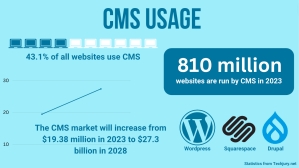
CMS is arguably the easiest way to create a website. According to Tech Jury, it’s used by 810 million websites, making up over 40% of sites on the web. CMS is a computer software that guides a creator in making a website. The most popular softwares are WordPress, Squarespace, and Drupal. These are websites themselves that create and maintain sites for someone with limited coding knowledge. They allow you to pick templates or formats and customize them to make the website your own.
Why Use CMS?
CMS is the most affordable and easy method to make and host a website. It can be used by people with little knowledge about coding and websites, and it’s the most affordable option.
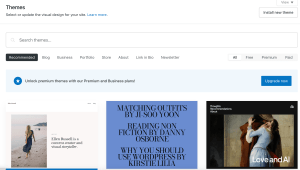
Writing code is not involved in CMS at all. You are given customizable templates that are pre-designed for a certain type of website. For example, on WordPress, you can search for templates for blogs, businesses, portfolios, and more. Then you are given the ability to customize the layout, colors, menu, pages, and components. It’s easy to import pictures and change the font of words on the screen.
Since there’s no coding involved, there are less chances for mistakes to be made in the process. You can simply pick which elements you want. Everything is highly customizable.
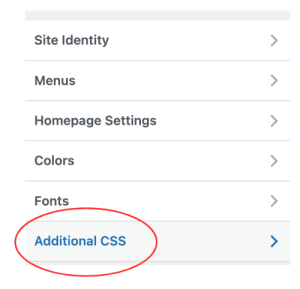
But coding can still be used. It’s possible to add elements to a webpage made with CMS. Creators with coding knowledge can add additional elements to personalize their sites even more. Hand-coded elements can be added. You can see here that WordPress allows this additional content to be added.
These softwares are also much less expensive than hand-writing code. There are free options with advertisements and then tiers for different payment options. So, startup organizations have the ability to show their content online without a high price tag.
The Downsides
Because CMS is used by so many creators across the world, it is more difficult to design a unique site. If you don’t make many changes to the template, you may even come across another website that looks almost identical. These softwares are template-driven, and even though they are highly customizable, there are some things that cannot be done. Formats are more basic and someone with extensive coding knowledge could do more by hand.
Hand-Coding Development: Complex, but Creative
Hand-coded development is like writing something by hand on a blank piece of paper. It starts with absolutely nothing and builds to become a website or other online piece of content. The code can be written in programming languages like HTML. Formally known as HyperText Markup Language, HTML is a simple structure for websites that allows high levels of customization, meaning every detail on a page can be edited in the exact way a creator wants. It’s a markup that is a combination of different elements, like text size and color. It controls how the elements look on a webpage, like where an image sits.

How it’s Similar to CMS
Both hand-coded development and CMS are methods to create a website. CMS does the coding for a user rather than them physically typing or pasting the commands that make up a site.
As previously mentioned, hand-coding can be used in addition to CMS to incorporate unique elements into a webpage. Web designers with some knowledge of code can use it to enhance what CMS has created for them.
The Differences
Hand-coding is much more of a challenge than CMS. It involves writing out all code from scratch instead of selection and customizing a template. It requires extensive knowledge of how to code and can create more mistakes for someone who is not informed enough.
But hand-coding allows for more creative freedom. It gives a designer more flexibility for distinctive platforms, which is why this method is used by many large corporations. It’s easier to add more features to a page, but this comes with added time and expenses. While someone using CMS can make a website in a matter of hours, a complex, stylish website can take months to code by hand.
Both methods are useful for different types of projects. Budget and time must be taken into account before deciding on which direction to chose. Whichever way you go, a beautiful website can be created to share content or products with people across the globe.
 Katie Coen
Leave a comment